
Assess each claim line by line, and pay exactly what you certified
Enter the subcontractor's claim against their schedule, certify what you agree is done and say why where it is less. Retention is held to its limit, the payment schedule is printed, and the supplier invoice is made for you.
What it does
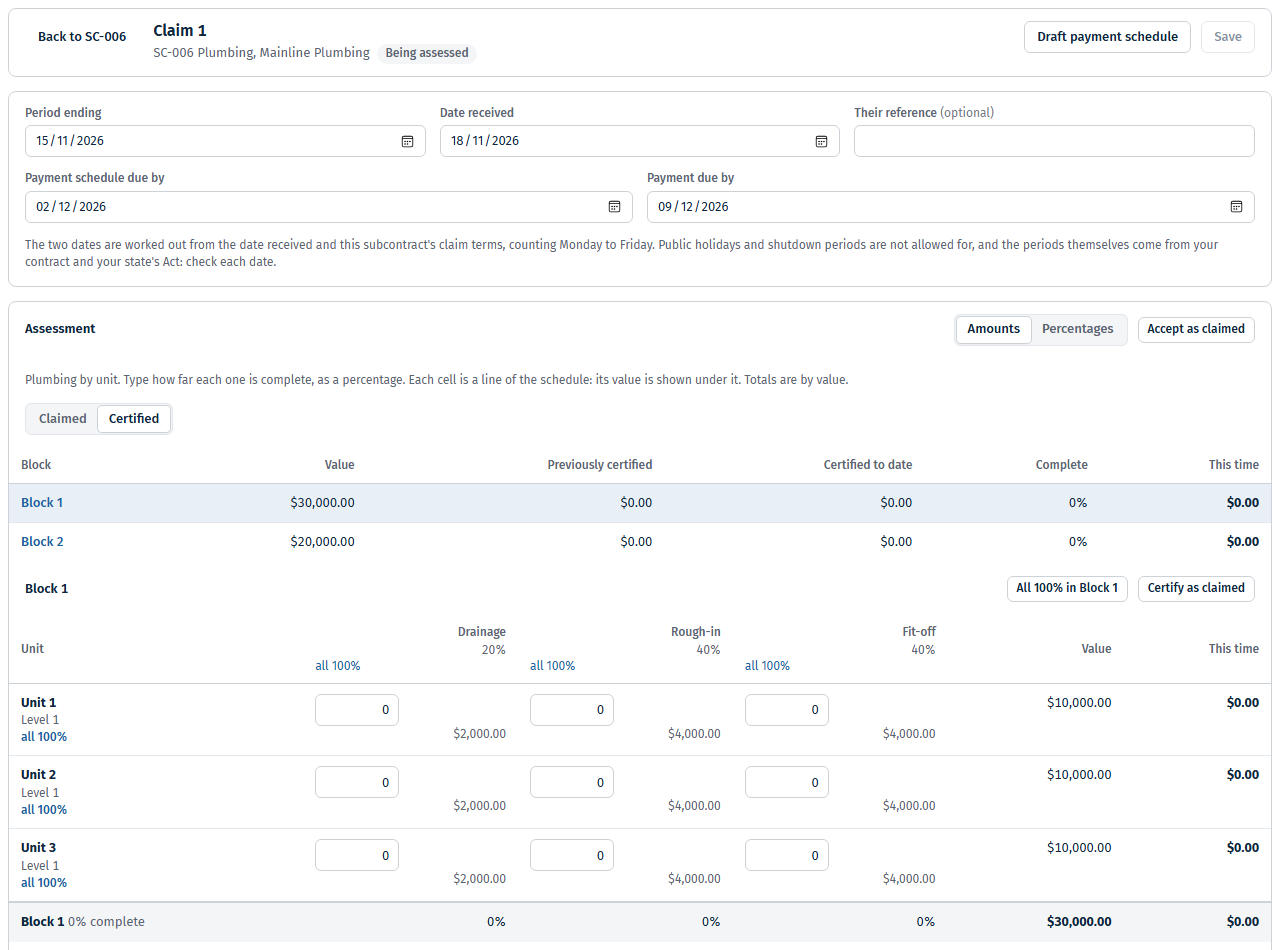
Line by line, with reasons
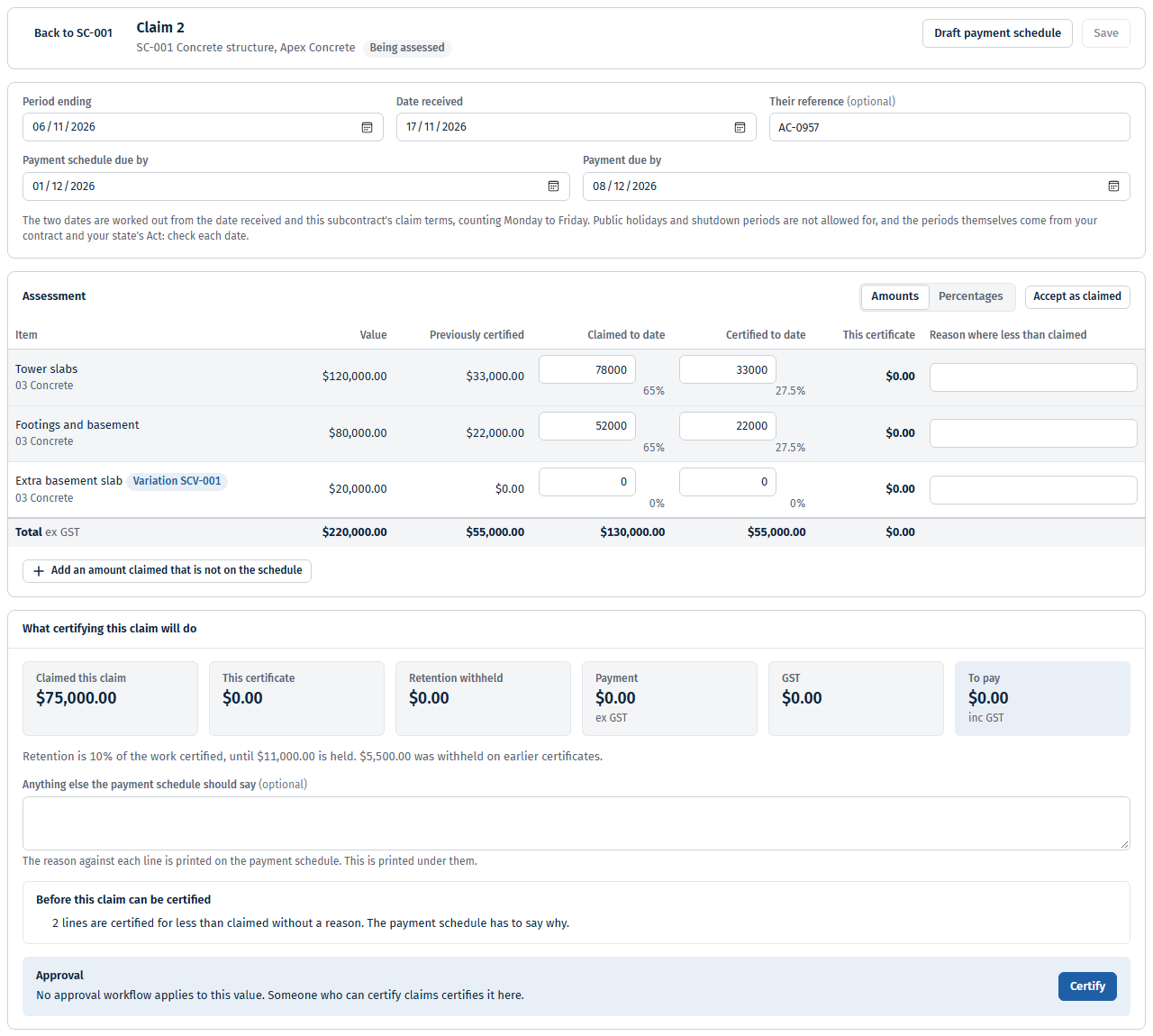
Claimed and certified to date on every schedule line and approved variation, as a percentage or an amount. A line certified for less than claimed needs a reason, and the reason goes on the payment schedule.
Retention worked out for you
Held at the subcontract's rate until its limit is reached, kept in a ledger, and released at practical completion and after the defects period, each release with its own invoice.
Certified means invoiced
Certifying makes the supplier invoice against the subcontract's purchase order, by cost code. It is paid like any other invoice, with payment approval where you use it.
How it works
Claim received
Typed in from their claim, or sent by the subcontractor through their portal.
Assess
What you agree is done on each line, and why where it is less.
Certify
Directly, or through your Subcontractor claims approval workflow.
Payment schedule
Print it, give it to them, and record the date you gave it.
Paid
The invoice is in Expenses, ready for payment approval and to be marked paid.
On the screen
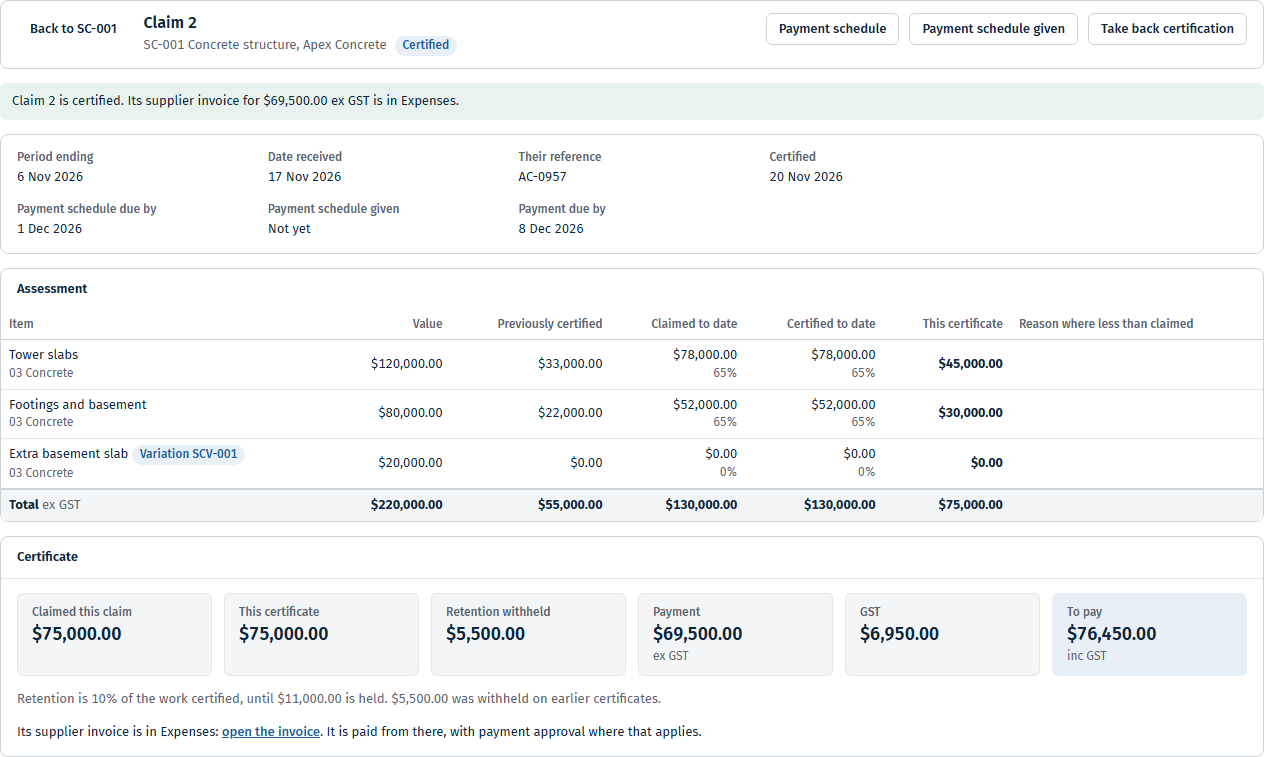
| Claimed this claim | $75,000.00 |
| This certificate | $65,000.00 |
| Retention withheld (10%, limit $11,000.00) | − $5,500.00 |
| Payment, ex GST | $59,500.00 |
| GST | $5,950.00 |
| To pay, inc GST | $65,450.00 |
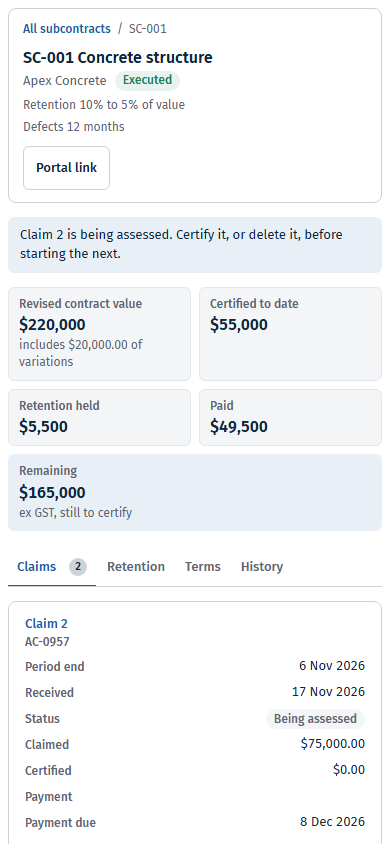
Retention is worked out on certified to date, so it stops at the limit by itself: here only $5,500 more is held because $5,500 was held on the claim before.
- Which claim it answers, and the amount claimed
- The scheduled amount, retention withheld and GST
- The reason for each line certified for less than claimed
- Anything else you want it to say
- The date payment is due
Nothing is emailed. You give it to the subcontractor and record the date you gave it; the screen warns when it is due today, overdue, or was given late.
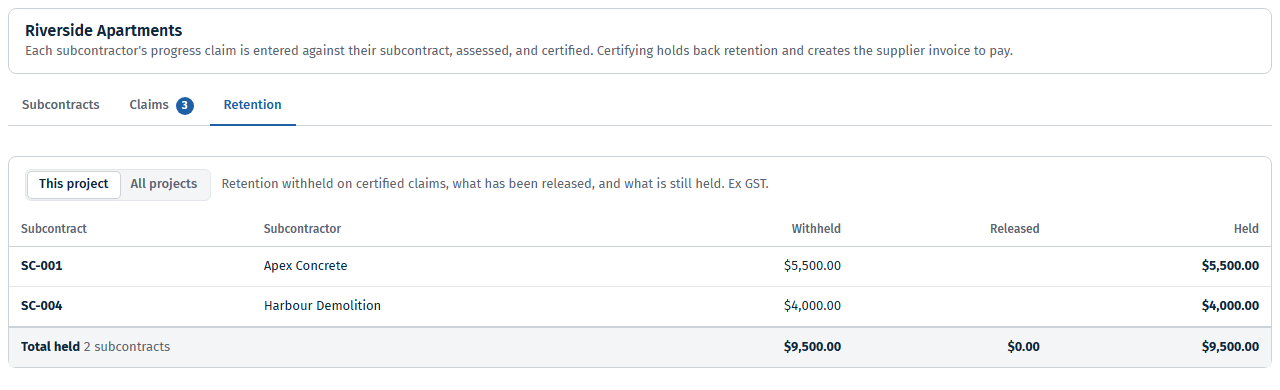
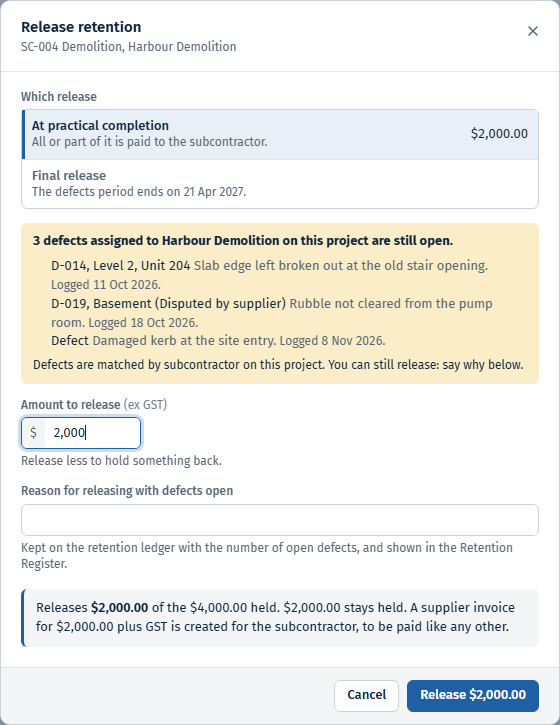
Each release makes a supplier invoice for the subcontractor, paid like any other.
Connected to the rest of the job
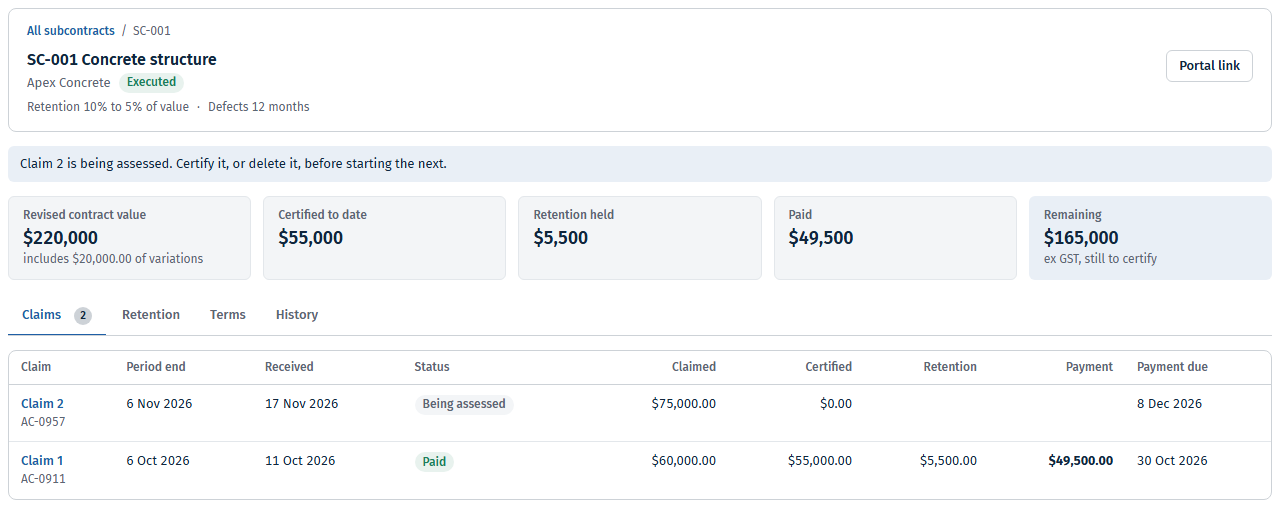
A claim is made against the subcontract, and becomes the invoice that is paid and sent to accounting. Nothing is typed twice.
Questions builders ask
Does it work out the payment schedule and payment due dates?
From the claim terms you set on each subcontract: the payment schedule within so many business days, and payment within so many business or calendar days, counted from the date the claim was received. There is no default and no period is built in; you take them from your contract and your state's Act. Business days are Monday to Friday, public holidays are not allowed for, and both dates can be corrected on the claim.
What if an earlier claim was over-certified?
The next certificate can be less than the one before. Nothing is payable, retention already held stays held, and a supplier credit note is made in place of an invoice.
Can I take a certification back?
On the latest claim, while its invoice is unpaid, not sent to accounting and has no payment approval, and no retention has been released since. The invoice goes to the trash and the claim can be assessed again.
We are moving a job in part-way through. Where do the old claims go?
Enter an opening balance on the subcontract: what had been certified, retention withheld and released, and any deposit, as at a date. No invoice is made for it, and the first claim here starts from those figures.
Do you handle deposits?
Yes. A deposit set on the subcontract is recorded as paid, which makes its invoice, and is taken back from each certificate at the subcontract's recovery percentage until it is all recovered.
See it on a project like yours
An hour with the people who build it. Bring a current job; we will walk it from subcontract to claim. Then try it yourself for 30 days, on a project of your own.