
Every dollar of retention, both ways, in one register
What you hold from each subcontractor, what each client holds from you, and the difference. Releases coming due are listed oldest first, with the overdue ones marked, so nothing sits forgotten after practical completion.
What it does
Both sides of the job
Retention held from subcontractors, read from their claims, and held by the client, read from your head contract claims. The net position is the difference.
Releases before they are late
Each release falls due at practical completion or when the defects period ends. Coming due lists them for the period you choose, to pay and to claim back, with overdue ones at the top.
A trust account record
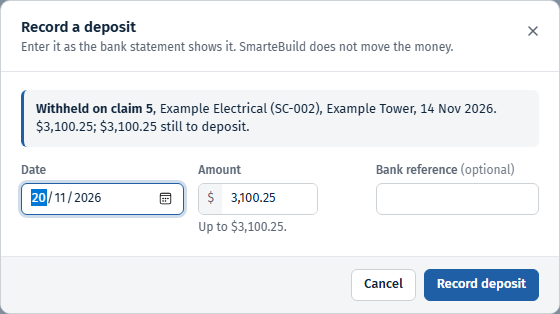
If you hold retention in a trust account, record each deposit and withdrawal from the bank's records, and see whether the account agrees with the retention you hold.
Where the figures come from
Claims certified
Each certified subcontractor claim withholds retention to the subcontract's limit.
Client claims approved
Each approved head contract claim records what the client withheld from you.
The register reads both
It enters nothing itself, so its figures always agree with the claims, to the cent.
Released
From the subcontract in Subcontractor Claims, or on the client's claim, with the same rules and approvals.
On the screen
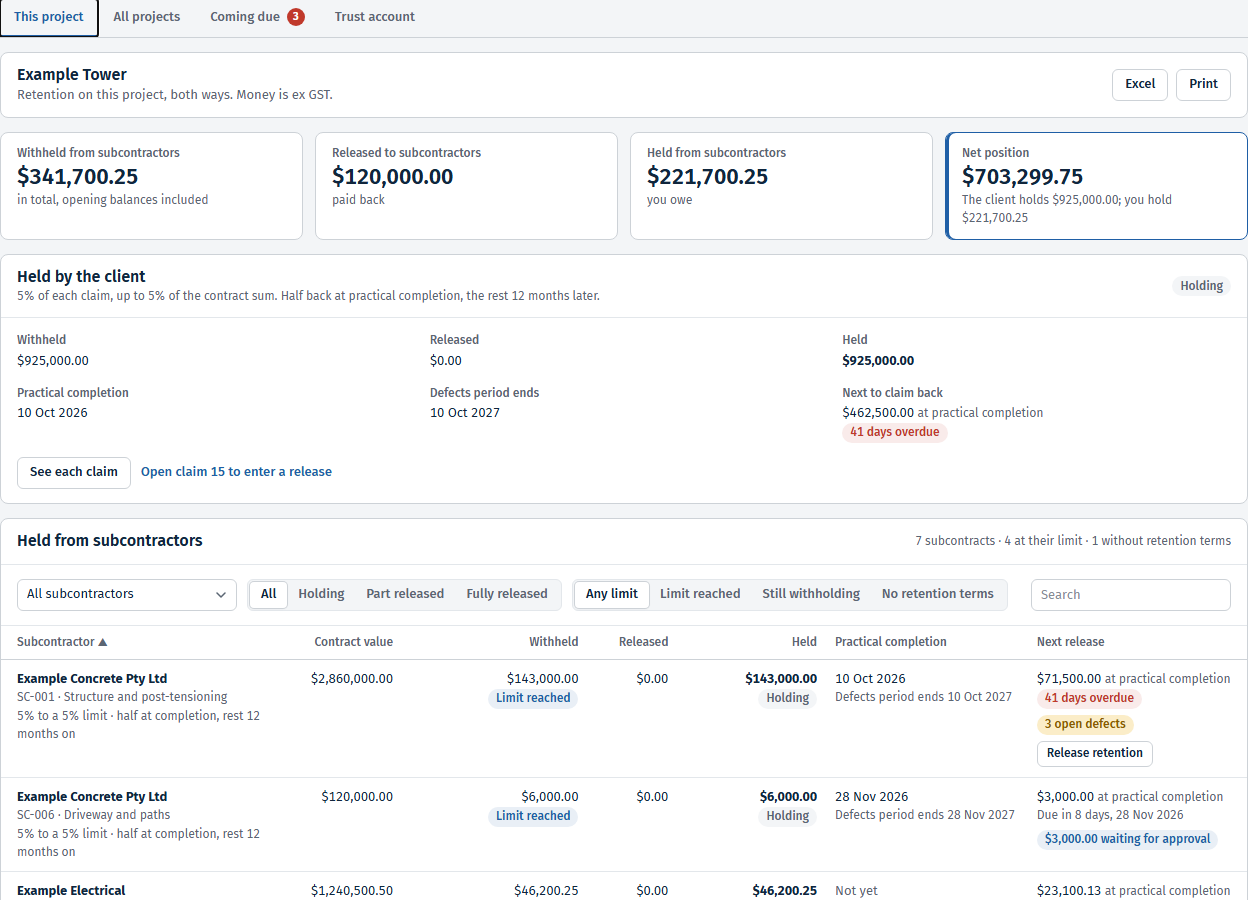
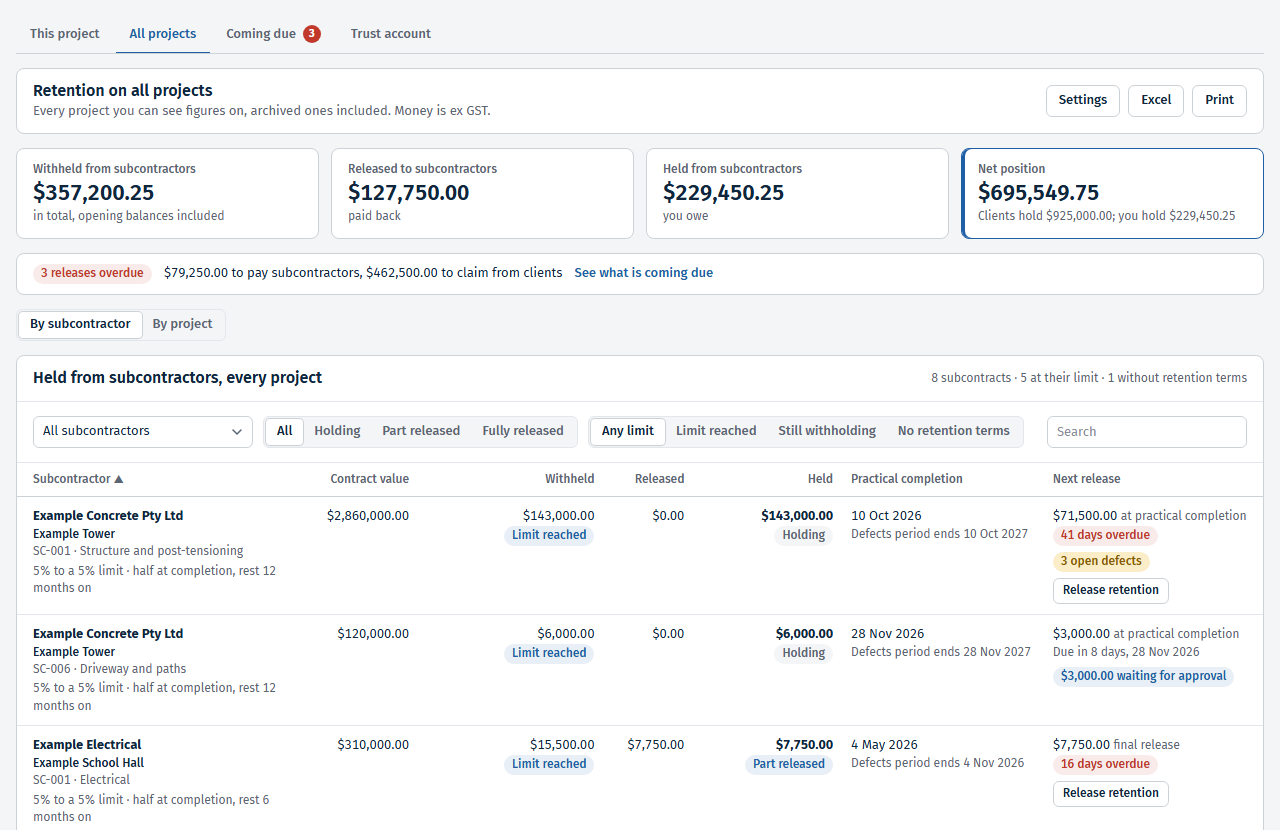
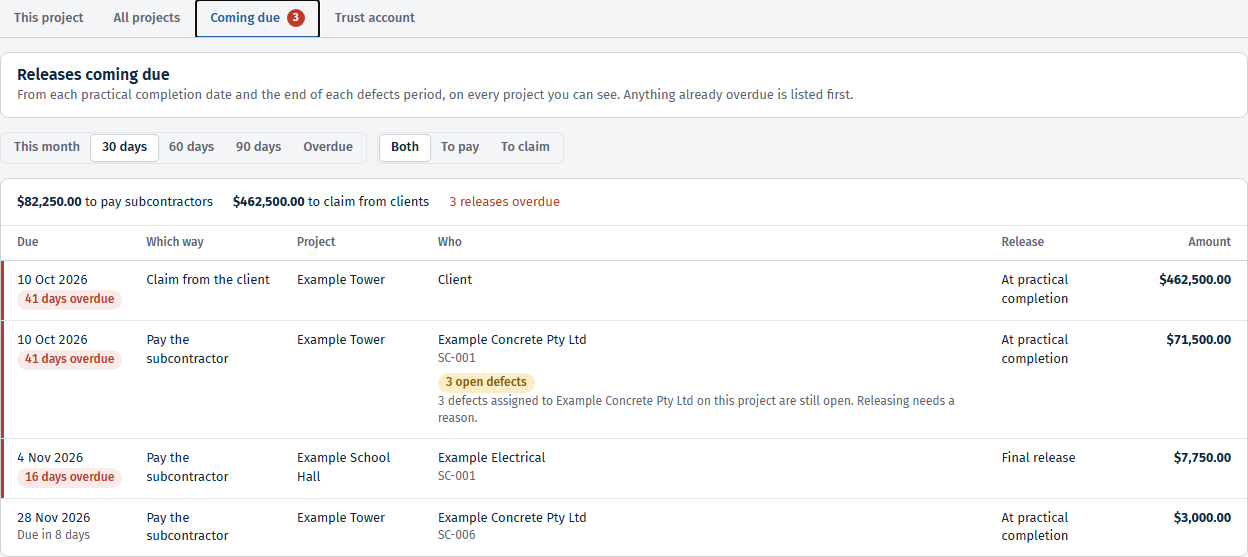
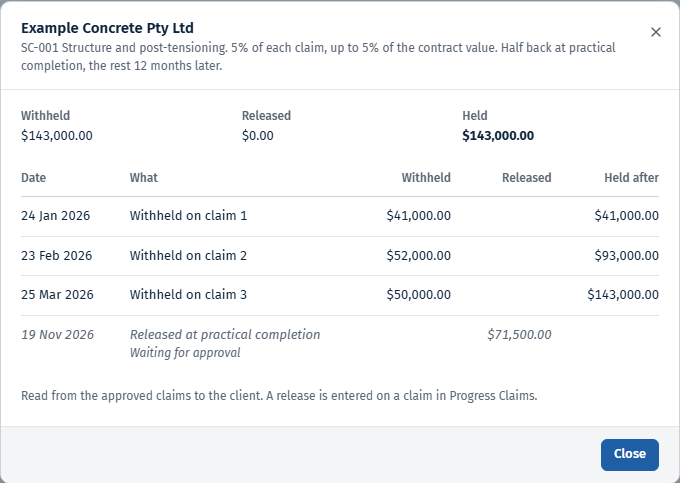
The life of retention on a subcontract
The trust account record
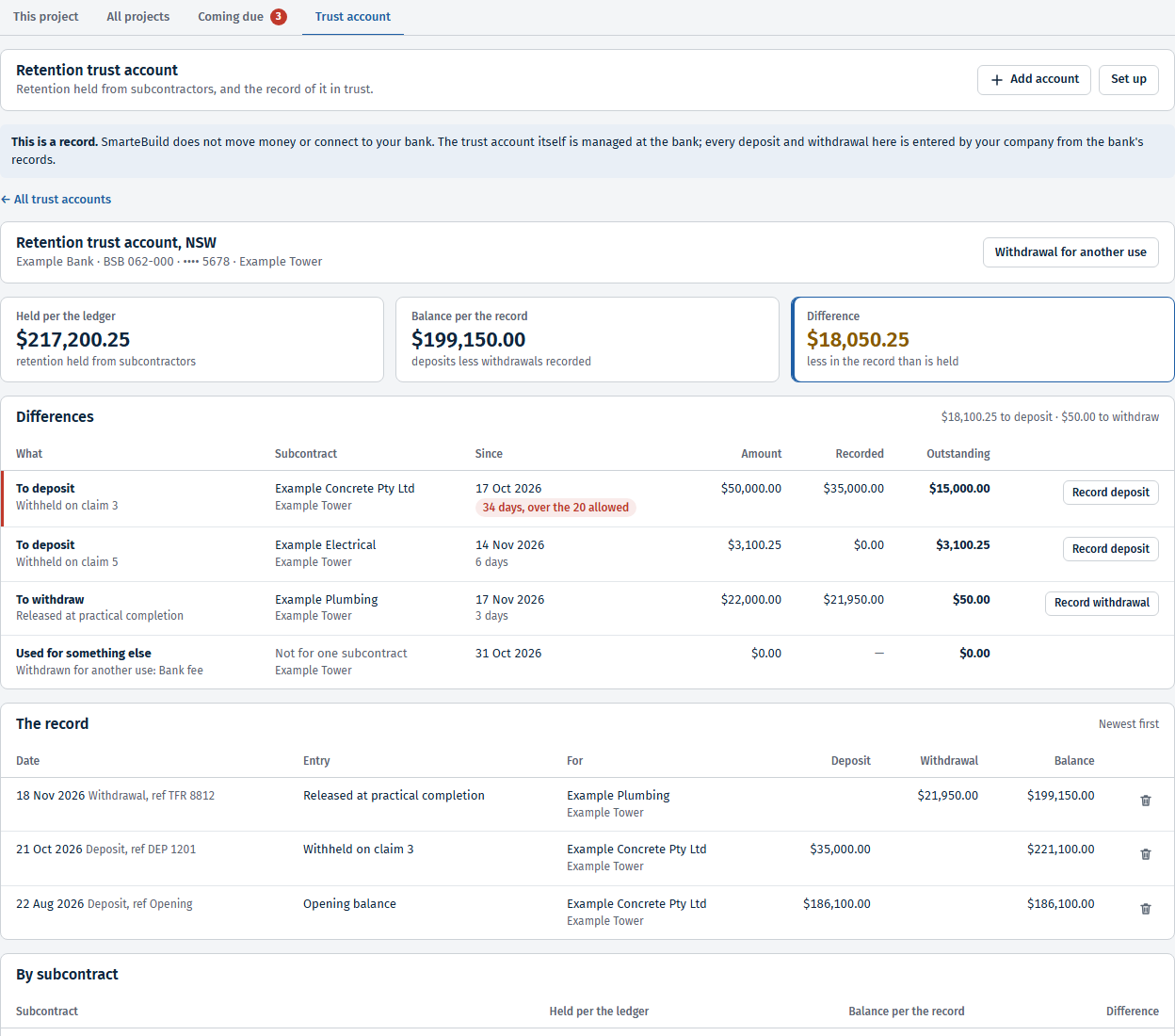
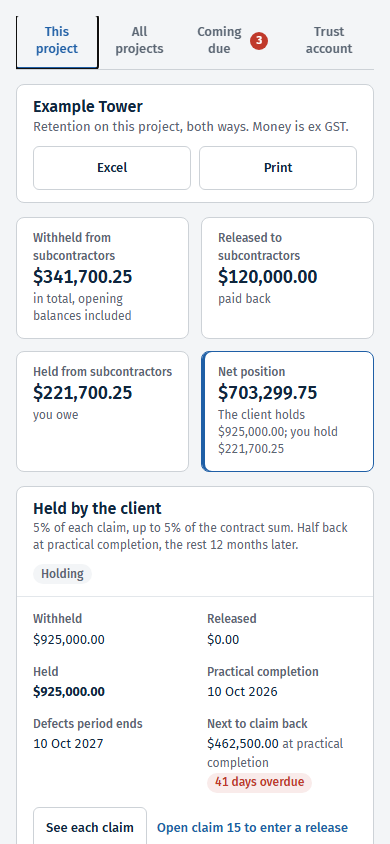
Where a subcontract's retention stands
Connected to the rest of the job
The register only reads. Every figure opens the ledger it came from, claim by claim.
Questions builders ask
Do we enter retention in the register?
No. It reads what certified subcontractor claims withheld and what approved head contract claims recorded, so it can never disagree with them. Releases are made where the retention is: on the subcontract in Subcontractor Claims, or on the client's claim.
When is a release due?
Two stages each way: the share released at practical completion, due on that date, and the rest when the defects period ends. A subcontract without a practical completion date shows its release with no date, and it is not listed as coming due until the date is recorded.
Does it hold or move money?
No. The trust account record is typed from your bank's records. SmarteBuild does not connect to the bank and does not move money; it lists every difference between the record and the retention you hold.
Does it know our state's trust account rules?
No rule is built in. Whether you use the record, and the days allowed to deposit and to withdraw, are company settings with no default. Until they are set, nothing is marked late.
See it on a project like yours
An hour with the people who build it. Bring a current job; we will walk it from subcontract to claim. Then try it yourself for 30 days, on a project of your own.